


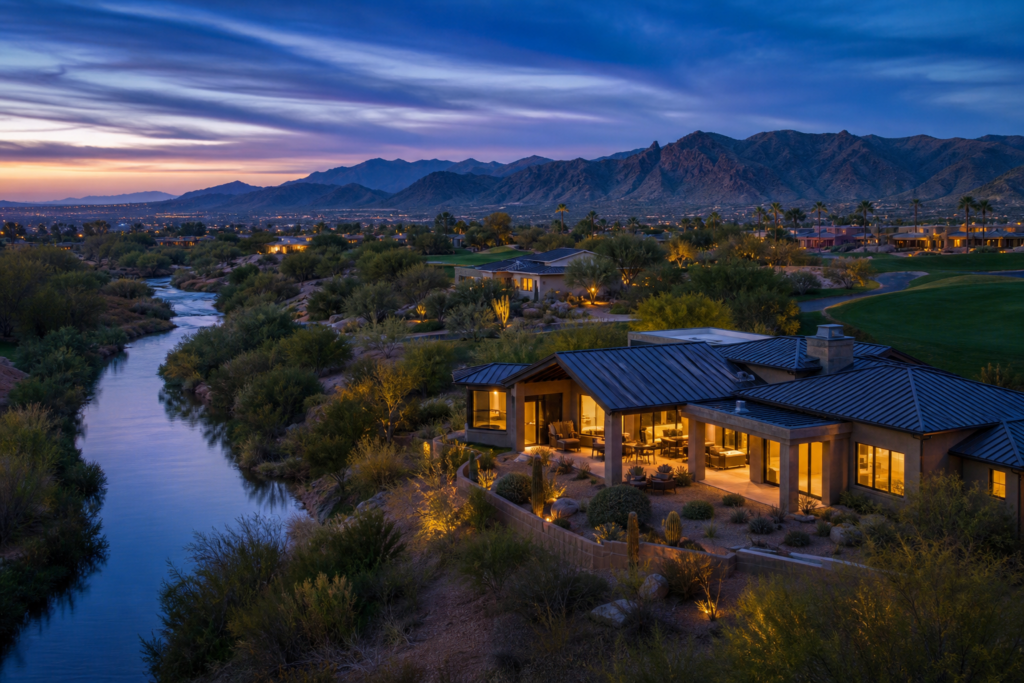
Mesa, Arizona offers one of the East Valley’s most diverse housing markets, with a median sale price around $455,000 as of mid-2026, balanced conditions giving buyers real leverage, and options ranging from historic downtown condos to master-planned communities near the Superstition foothills.
Mesa AZ Real Estate: A Buyer’s Guide for 2026
What is the Mesa, AZ real estate market like for buyers in 2026?
Mesa’s housing market in 2026 sits in balanced territory, meaning neither buyers nor sellers hold a commanding edge. The most recent data shows a median sale price around $455,000, homes averaging about 59 days on active listings, and sale prices landing near asking in many transactions. That combination gives prepared buyers meaningful options across a genuinely diverse housing stock, from affordable attached homes near employment corridors to larger single-family properties in established East Valley neighborhoods.
What the Numbers Actually Tell You About Mesa Right Now
Here’s what I tell every buyer who asks me about Mesa: the headline number matters less than understanding what it means for your specific search. Let me walk you through the data I’m working with as of late August 2026.
According to Redfin’s Mesa housing market page, the median sale price over the most recent rolling 3-month window is approximately $455,000, down about 1.6% year over year. That modest softening from prior-year levels is a signal worth noting, but it doesn’t mean Mesa is in freefall. It means you have more room to negotiate than buyers did in 2022 or 2023.
Zillow’s home value index puts the average Mesa home value at roughly $433,754, also down about 1.2% over the past year, with typical homes going under contract in around 30 days once they’re priced right. Meanwhile, Realtor.com’s Mesa market page reports the median listing price in August 2026 at about $462,000, with a median of 59 days on market for active listings and homes selling at roughly 100% of asking price.
That gap between active listing days (59) and pending timeline (30) tells you something important: overpriced homes are sitting, but well-priced homes are still moving. If you’re a buyer, that’s leverage you can use, but you need to know which category a property falls into before you make an offer. That’s exactly where local market knowledge earns its keep.
| Metric | Value (August 2026) | Source |
|---|---|---|
| Median sale price (rolling 3-month) | ~$455,000 | Redfin |
| Average home value | ~$433,754 | Zillow |
| Median listing price | ~$462,000 | Realtor.com |
| Median list price per sq ft | $268 | Realtor.com |
| Median days on market (active) | 59 days | Realtor.com |
| Typical days to pending | ~30 days | Zillow |
| Sale-to-list price ratio | ~100% | Realtor.com |
Both Houzeo’s 2026 Mesa market summary and Realtor.com characterize Mesa as a balanced market in this period. That framing is consistent with what I’m seeing on the ground across the East Valley: outcomes depend heavily on the specific property, its location within Mesa, its condition, and its price point. There’s no single “Mesa market” experience right now, which is exactly why working with someone who knows the city’s sub-markets is so valuable.
Mesa’s Housing Stock: More Range Than Most Buyers Expect
One of the things I love about Mesa as a market is how much variety it actually contains. This isn’t a city of cookie-cutter subdivisions. The City of Mesa’s Balanced Housing Plan update from November 2025 documents total housing supply growing from 219,909 units in 2023 to 226,071 units in 2025, with a documented surplus of units relative to the city’s own “total housing needs” estimates. That planned growth reflects a deliberate effort to expand options across price points and product types.
Single-family homes
Single-family detached homes remain the dominant category in Mesa’s inventory. You’ll find everything from mid-century ranch homes in central Mesa to newer builds in master-planned communities toward the eastern edges of the city. Larger lots with mountain or golf course adjacency tend to sit at the higher end of the price spectrum.
Condos, townhomes, and attached living
For buyers who want lower maintenance or proximity to employment and transit, Mesa has a growing supply of attached options. The city’s planning data shows multifamily approvals in recent years exceeding estimated annual need, with 1,247 multifamily units approved in one recent year against an estimated annual plan need of 806 units. That deliberate expansion of higher-density options is showing up in what’s available to buyers today.
Area character and lifestyle anchors
I work across the East Valley, and Mesa’s internal geography matters when you’re choosing where to focus your search. Here’s a quick orientation:
- Downtown and Central Mesa: Historic homes, walkability, arts institutions, and light-rail access make this pocket attractive for buyers who want urban character without Phoenix prices.
- East Mesa (Las Sendas, Red Mountain area): Larger lots, views toward the Superstition Mountains, golf course communities, and hiking access. This tends to be the higher price-point end of Mesa’s range.
- Southwest Mesa: Closer to major employment corridors, generally more moderately priced, with newer subdivisions that offer good value per square foot.
According to the Realtor.com Arizona overview, Mesa’s median monthly rent sits around $1,500 as of August 2026, which gives useful context for buyers weighing ownership against renting. At a median listing price of $462,000 and $268 per square foot, Mesa is generally more affordable than premium East Valley cities like Chandler or Gilbert while still offering the infrastructure and amenities of Arizona’s third-largest city.
Your specific price point and lifestyle priorities will shape which part of Mesa makes the most sense for your search. That’s a conversation I have with every buyer before we start touring, because going in without a clear geographic focus wastes time in a market where well-priced homes at 30-day pending timelines don’t wait around.
How to Approach Buying in Mesa Right Now
Balanced markets reward preparation. Here’s what I walk my clients through before we start making offers in Mesa.
Get your financing dialed in first
Even in a balanced market, sellers respond to strength. A fully underwritten pre-approval, not just a pre-qualification letter, puts you in a position to move quickly when the right property appears. Verify your numbers with your lender, because the CFPB’s homebuying resources are a solid starting point for understanding what to expect from the financing process.
Understand what “balanced” actually means for negotiation
Homes selling at roughly 100% of asking doesn’t mean there’s zero room to negotiate. It means the average transaction closes near list price, but averages hide a lot. Overpriced listings are sitting for 59+ days and often accepting concessions. Well-priced homes in desirable pockets are still drawing competitive offers. Knowing which situation you’re in requires someone who’s tracking this market week to week, not just reading a portal summary.
Factor in the full cost of ownership
Mesa sits within Maricopa County, and your carrying costs will include property taxes, HOA fees (if applicable), homeowner’s insurance, and any assessments tied to the specific community. These vary significantly across Mesa’s neighborhoods and product types. I always recommend buyers confirm their full monthly picture with their lender before we finalize a search range, because the purchase price is only part of the equation.
Know your inspection rights
Arizona’s purchase contracts include inspection contingencies that give buyers a defined window to investigate the property and negotiate repairs or price adjustments based on findings. How you use that window, and what you ask for, can make a meaningful difference in your final outcome. I walk my clients through every step of that process so nothing gets missed.
The National Association of Realtors’ research and statistics consistently show that buyers who work with a local agent report higher satisfaction and better outcomes than those who navigate the process alone. In a market with Mesa’s internal complexity, that difference is real.
Every situation is different, and the only way to know which part of Mesa makes sense for your budget and priorities is to run through it with someone who knows this market. That’s exactly the conversation I have with buyers before we ever open a door.
Frequently Asked Questions About Buying a Home in Mesa, AZ
Is Mesa a buyer’s market or seller’s market in 2026?
Mesa is currently characterized as a balanced market by multiple data sources, including Realtor.com and Houzeo. Neither buyers nor sellers hold a decisive edge overall, but outcomes vary significantly by neighborhood, product type, and price point. Well-priced homes in desirable locations still move in around 30 days, while overpriced listings are sitting considerably longer.
What is the median home price in Mesa, AZ in 2026?
As of mid-2026, the median sale price in Mesa is approximately $455,000 according to Redfin’s rolling 3-month data, while Zillow’s home value index puts the average at around $433,754. Realtor.com reports a median listing price of about $462,000 for August 2026. These figures represent the citywide picture; individual neighborhoods and product types vary considerably from those medians.
Is it cheaper to buy in Mesa than in Chandler or Gilbert?
Generally, yes. Mesa’s median listing price and price per square foot ($268 as of August 2026) tend to position it as more affordable than premium East Valley cities like Chandler or Gilbert, while still offering comparable access to employment corridors, freeways, and East Valley amenities. The gap varies by neighborhood and product type, so a direct comparison on specific homes is more useful than a headline-to-headline comparison.
What types of homes are available in Mesa?
Mesa’s housing stock includes single-family detached homes (the dominant category), condos, townhomes, and manufactured housing. The city has been deliberately expanding multifamily and higher-density options, with the City of Mesa’s Balanced Housing Plan showing multifamily approvals exceeding estimated annual need in recent years. You can find everything from mid-century ranch homes in central Mesa to newer master-planned communities near the eastern foothills.
How long do homes stay on the market in Mesa?
Active listings in Mesa are sitting at a median of about 59 days as of August 2026, according to Realtor.com. However, homes that are well-priced and well-located are going under contract in closer to 30 days, per Zillow’s pending timeline data. The spread between those two numbers tells you that pricing strategy matters enormously, whether you’re buying or selling.
Mesa Has the Range. Let’s Find Your Fit.
Mesa’s diversity as a market is real, and it works in your favor as a buyer, if you know how to navigate it. Balanced conditions, a wide product mix, and meaningful price variation across the city mean the right home at the right price exists here. The work is knowing where to look and how to position your offer when you find it.
I’ve helped buyers across Mesa, Gilbert, Chandler, Queen Creek, and the broader East Valley find homes that fit their lives and their budgets. If you’re ready to get specific about what Mesa can offer you, let’s talk.
Call or text me at 480.220.0215, or schedule a mini consultation here and let’s map out your Mesa home search together.
Equal Housing Opportunity. This article is provided for general informational purposes only and does not constitute legal, tax, or financial advice. Market data reflects conditions as reported by third-party sources and may change. Readers should confirm their own numbers with their closing agent, tax advisor, or lender. Dawn Forkenbrock is licensed in Arizona and regulated by the Arizona Department of Real Estate (ADRE). Broker compensation is fully negotiable and not set by law.


